.avif)

Appliance Leak Water Damage in Spring TX
Residential Water Damage Restoration
Appliance leak flooding your Spring TX home? Precision Restoration handles washing machine, dishwasher, and water heater water damage 24/7. Call (346) 209-2992.
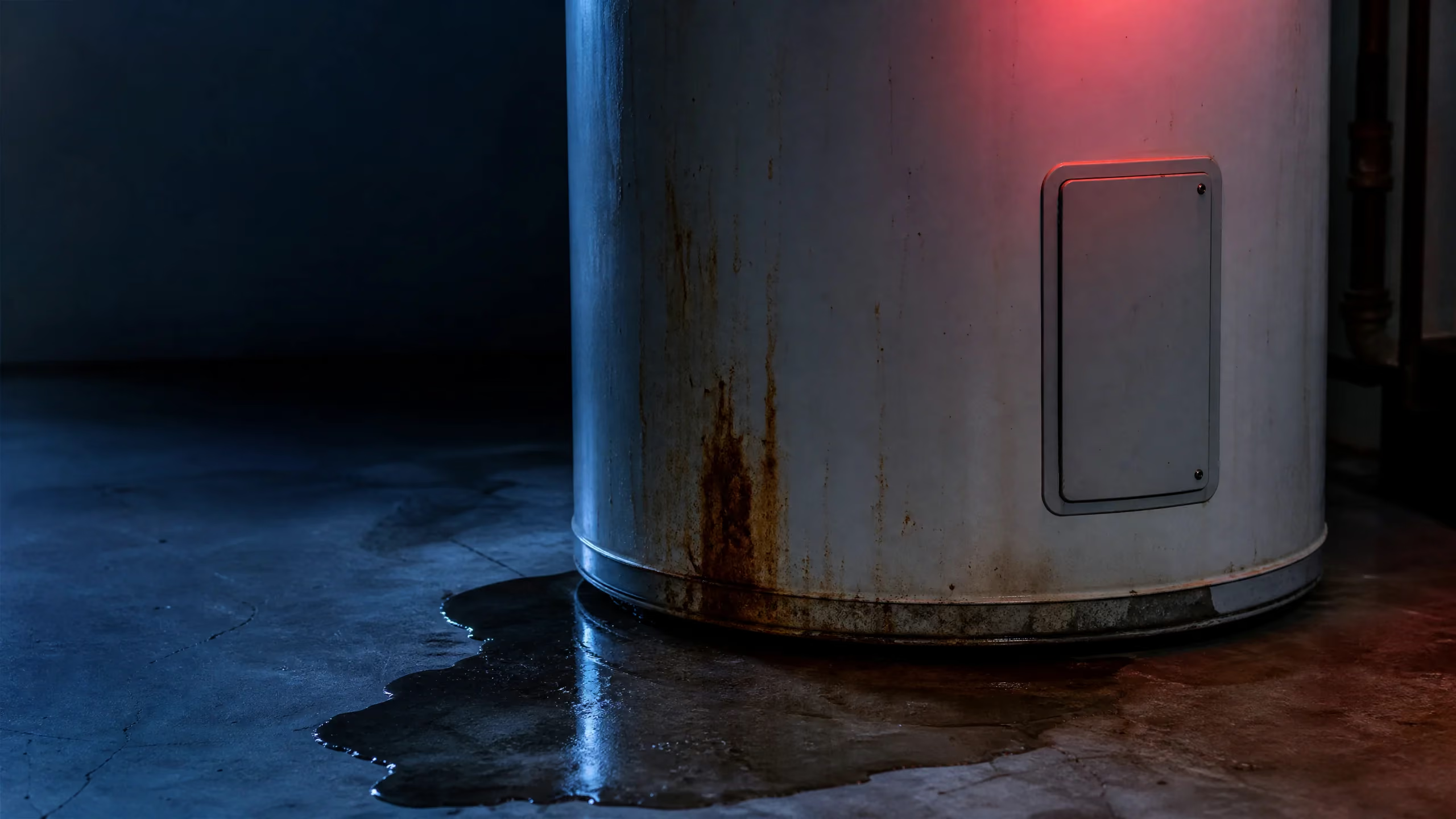
Appliance leak water damage in Spring TX is one of the most common, and most underestimated, property emergencies that homeowners in this community face. While catastrophic events like burst pipes and storm flooding get the most attention, the reality is that a significant portion of residential water damage claims in the greater Houston area originate from a single malfunctioning appliance. A washing machine supply hose that has been slowly weakening for years, a dishwasher door seal that finally gives out, a water heater that corrodes through its tank, these are the everyday disasters that can cause tens of thousands of dollars in damage if not addressed immediately and professionally. Precision Restoration of Texas is based in Spring TX and provides rapid, IICRC-certified water damage restoration for appliance-related flooding throughout the community. Our familiarity with the Spring TX housing stock, from the established neighborhoods near Cypresswood to the newer developments along the Grand Parkway, means we understand the specific materials and construction methods that affect how water migrates and how it must be dried.
The Most Common Appliance Leaks in Spring TX Homes
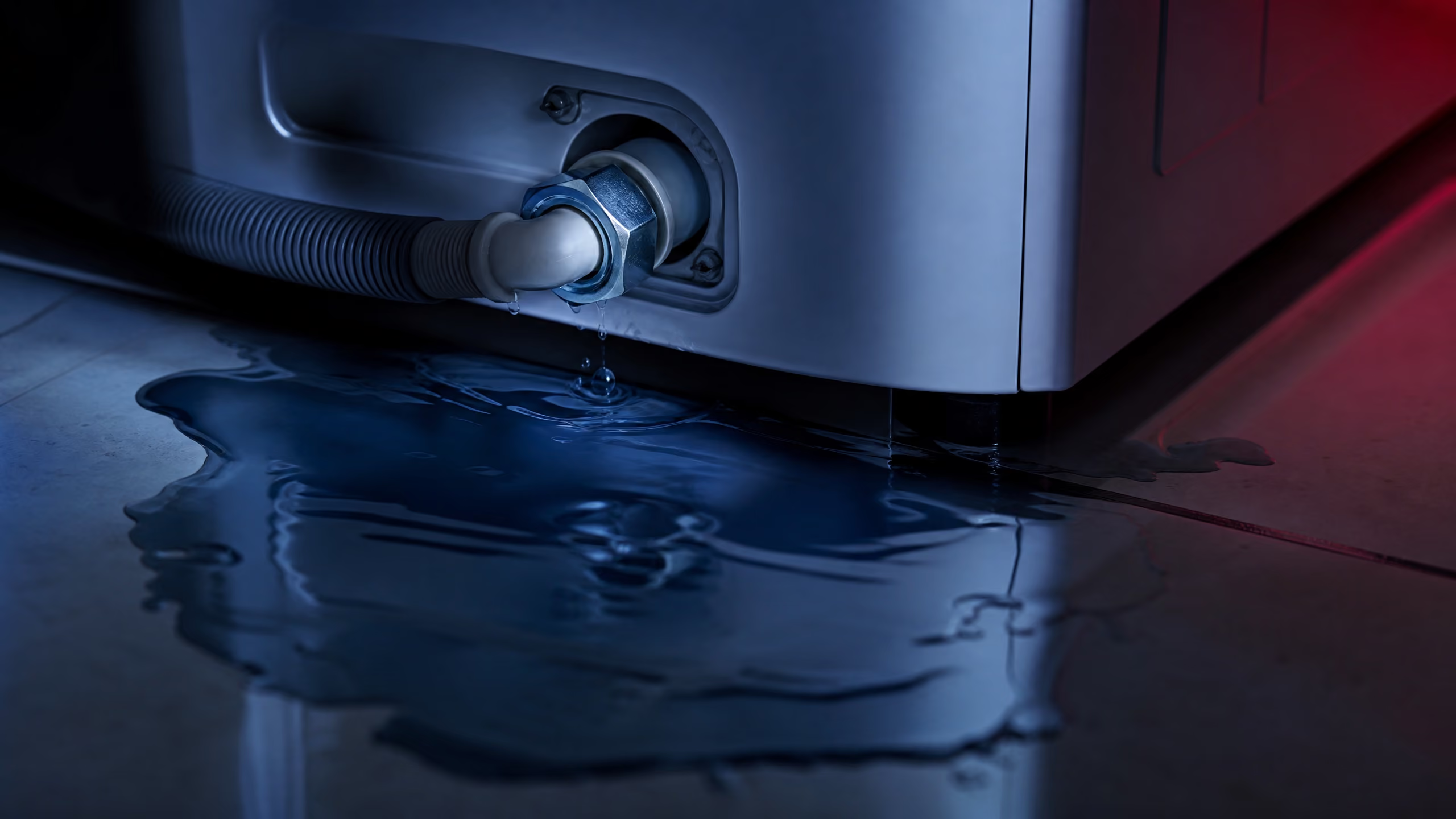
Understanding which appliances are most likely to cause water damage in your Spring TX home helps you know where to focus your preventive attention, and what to do when the inevitable happens. Washing Machine Failures. The washing machine is statistically one of the most common sources of significant water damage in residential properties. The two primary failure modes are supply hose failure and drain overflow. Braided stainless steel supply hoses have a typical lifespan of five to eight years; rubber hoses are even shorter-lived. When a supply hose fails, it can release water at the full pressure of your home's water supply, typically 40 to 80 PSI, until someone shuts off the valve or the water is cut. In the time it takes to discover a failed washing machine hose, hundreds of gallons of water can flood the laundry room and adjacent spaces. Drain overflows, caused by a clogged drain line or an unbalanced load that shifts the drain hose, release the full volume of the wash cycle, typically 15 to 30 gallons, onto the floor.
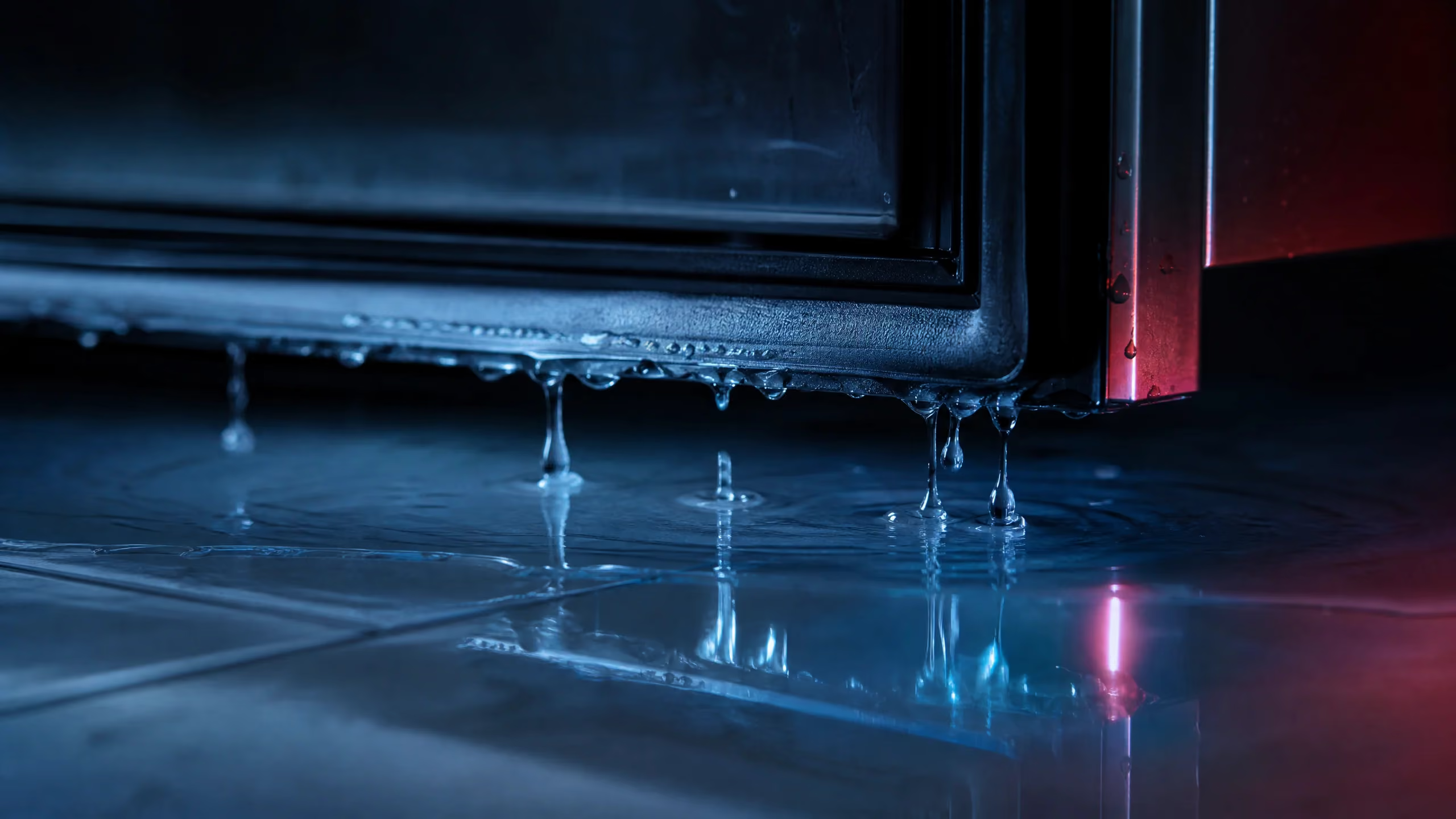
Dishwasher Leaks. Dishwasher water damage in Spring TX homes most commonly results from a failed door gasket, a cracked or disconnected drain hose, or a faulty water inlet valve. Because dishwashers are typically installed under a countertop adjacent to a sink cabinet, water from a dishwasher leak often migrates into the cabinet base, under the flooring, and into the subfloor before it is discovered. The enclosed nature of this damage pathway means that by the time a homeowner notices a problem, significant moisture has already accumulated in hidden areas. Water Heater Failures. A water heater tank failure is one of the most damaging appliance events a Spring TX homeowner can experience. A standard 40 to 50 gallon water heater that fails catastrophically releases its entire contents onto the floor. More commonly, water heaters develop slow leaks at the base, often caused by internal corrosion, that go unnoticed for weeks or months, saturating the surrounding flooring and subfloor and creating ideal conditions for mold growth. Water heaters should be inspected annually and replaced proactively at the end of their expected lifespan, typically 8 to 12 years. Refrigerator Ice Maker Lines. The small plastic supply line that connects your refrigerator's ice maker and water dispenser to your home's water supply is one of the most overlooked water damage risks in a Spring TX home. These lines are typically made of plastic or copper and can crack, kink, or become disconnected, releasing a slow but continuous stream of water behind the refrigerator. Because the refrigerator is pushed against the wall, this type of leak can go undetected for weeks, saturating the flooring, subfloor, and wall behind the appliance.
How Appliance Leaks Destroy Flooring and Subfloors in Spring TX Homes
The flooring in your Spring TX home is your first line of defense against water migration, and it is often the first casualty of an appliance leak. Understanding how different flooring types respond to water helps explain why professional mitigation is so important. Hardwood flooring is particularly vulnerable to water damage. Solid hardwood absorbs moisture rapidly, causing the boards to swell, cup (edges rise higher than the center), or crown (center rises higher than the edges). Engineered hardwood is more dimensionally stable but can delaminate when exposed to significant moisture. In many cases, hardwood flooring that has been wet for more than 24 to 48 hours cannot be saved and must be replaced. However, rapid professional extraction and drying, particularly with specialized floor drying systems that direct airflow under the flooring, can sometimes save hardwood that would otherwise be a total loss. Luxury vinyl plank (LVP) and tile are more water-resistant on the surface, but they are not waterproof. Water migrates through seams and around edges, saturating the subfloor beneath while the surface flooring appears undamaged. This creates a particularly insidious situation where the subfloor is rotting and growing mold while the surface looks fine. Precision Restoration uses moisture meters and thermal imaging to detect this hidden subfloor moisture even when the surface flooring appears dry. Carpet and pad act like a sponge, absorbing and holding water against the subfloor. The pad, the foam layer between the carpet and the subfloor, is particularly problematic because it holds water tightly and dries very slowly without professional extraction. In most cases, carpet pad that has been significantly wet must be removed and replaced, even if the carpet itself can be saved. OSB and plywood subfloor are the structural foundation of your flooring system, and they are highly vulnerable to water damage. OSB (oriented strand board) begins to swell and delaminate when wet, losing structural integrity rapidly. Plywood is more resilient but will also rot and grow mold if kept wet. Subfloor damage is one of the most expensive consequences of unaddressed appliance leaks.
Immediate Steps to Take When an Appliance Floods Your Spring TX Home
The actions you take in the first minutes after discovering an appliance leak can significantly limit the total damage. Here is what to do: Shut off the water supply immediately. Every appliance that uses water has a shutoff valve. For washing machines, there are two valves, hot and cold, typically located on the wall behind the machine. For dishwashers, the shutoff is usually under the kitchen sink. For water heaters, there is a cold water inlet valve at the top of the tank. Knowing where these valves are before an emergency occurs is one of the most valuable things a Spring TX homeowner can do. Shut off the electricity if water is near electrical outlets or appliances. Water and electricity are a lethal combination. If the flooding has reached areas near electrical outlets, switches, or the appliance itself, shut off the circuit breaker for that area before entering. Document the damage before cleanup. Take extensive photos and video of the flooding, the affected appliance, and all water-damaged materials. This documentation is essential for your insurance claim. Remove standing water with towels and mops if the volume is small. For minor appliance leaks, removing surface water quickly can help limit the spread. However, this is not a substitute for professional extraction and drying, it is a first-response measure to buy time until professionals arrive. Call Precision Restoration at (346) 209-2992. Even what appears to be a minor appliance leak can cause significant hidden damage. Our team can assess the true extent of the moisture migration and determine whether professional drying is needed.
Professional Mitigation for Hardwood and Tile Flooring in Spring TX
One of the most common questions we receive from Spring TX homeowners is whether their flooring can be saved after an appliance leak. The honest answer is: it depends on how quickly professional mitigation begins. For hardwood flooring, the window for saving the floor is narrow, typically 24 to 48 hours from the time of the water event. Precision Restoration uses specialized floor drying systems that inject warm, dry air directly under the flooring through small access holes, dramatically accelerating the drying process and maximizing the chance of saving the floor. We also use moisture meters to monitor the moisture content of the wood throughout the drying process, ensuring that the flooring reaches safe moisture levels before the drying equipment is removed. For tile flooring, the tile itself is typically unaffected by water, but the grout, adhesive, and subfloor beneath can absorb significant moisture. We use penetrating moisture meters to measure moisture levels in the subfloor through the tile and deploy drying equipment accordingly.
Frequently Asked Questions About Appliance Leak Water Damage in Spring TX
Q: Is appliance leak water damage covered by homeowner's insurance in Texas?
A: In most cases, yes. Sudden and accidental appliance failures, a washing machine hose that bursts, a dishwasher that overflows, a water heater that fails, are typically covered by standard homeowner's insurance in Texas. Gradual leaks that developed over time due to lack of maintenance may be excluded. Precision Restoration works with your insurance carrier and provides complete documentation to support your claim.
Q: How do I know if my subfloor has been damaged by an appliance leak?
A: Signs of subfloor damage include soft or spongy spots when walking on the floor, visible warping or buckling of surface flooring, a musty odor coming from the floor area, and visible discoloration or staining at floor seams. Precision Restoration uses penetrating moisture meters and thermal imaging to definitively assess subfloor moisture levels.
Q: Can my hardwood floors be saved after a washing machine flood?
A: Possibly, if professional mitigation begins quickly. The key factors are the volume of water, how long the floor was wet before extraction began, and the species and thickness of the hardwood. Precision Restoration uses specialized floor drying systems that give hardwood the best possible chance of recovery.
Q: How can I prevent appliance leaks in my Spring TX home?
A: Replace washing machine supply hoses every five years, or upgrade to braided stainless steel hoses. Install a water leak detector near your washing machine, dishwasher, and water heater. Have your water heater inspected annually and replace it proactively at the end of its expected lifespan. Install an automatic water shutoff device on your main water line.
Q: How long does it take to dry out after an appliance leak?
A: Most appliance leak mitigation projects in Spring TX require three to five days of structural drying, depending on the volume of water, the materials affected, and how quickly extraction began. Precision Restoration monitors daily and provides a verified clearance when drying is complete.
Appliance Leak in Your Spring TX Home? Call Precision Restoration Now. Precision Restoration of Texas is based right here in Spring TX, which means we can respond to appliance leak emergencies faster than any out-of-area restoration company. Our IICRC-certified technicians have the equipment and expertise to save your flooring, protect your subfloor, and prevent mold growth.
Call (346) 209-2992, available 24/7 for appliance leak water damage emergencies in Spring TX.