.avif)

Commercial Capital Improvements and Renovations in Houston, TX
Service Overview
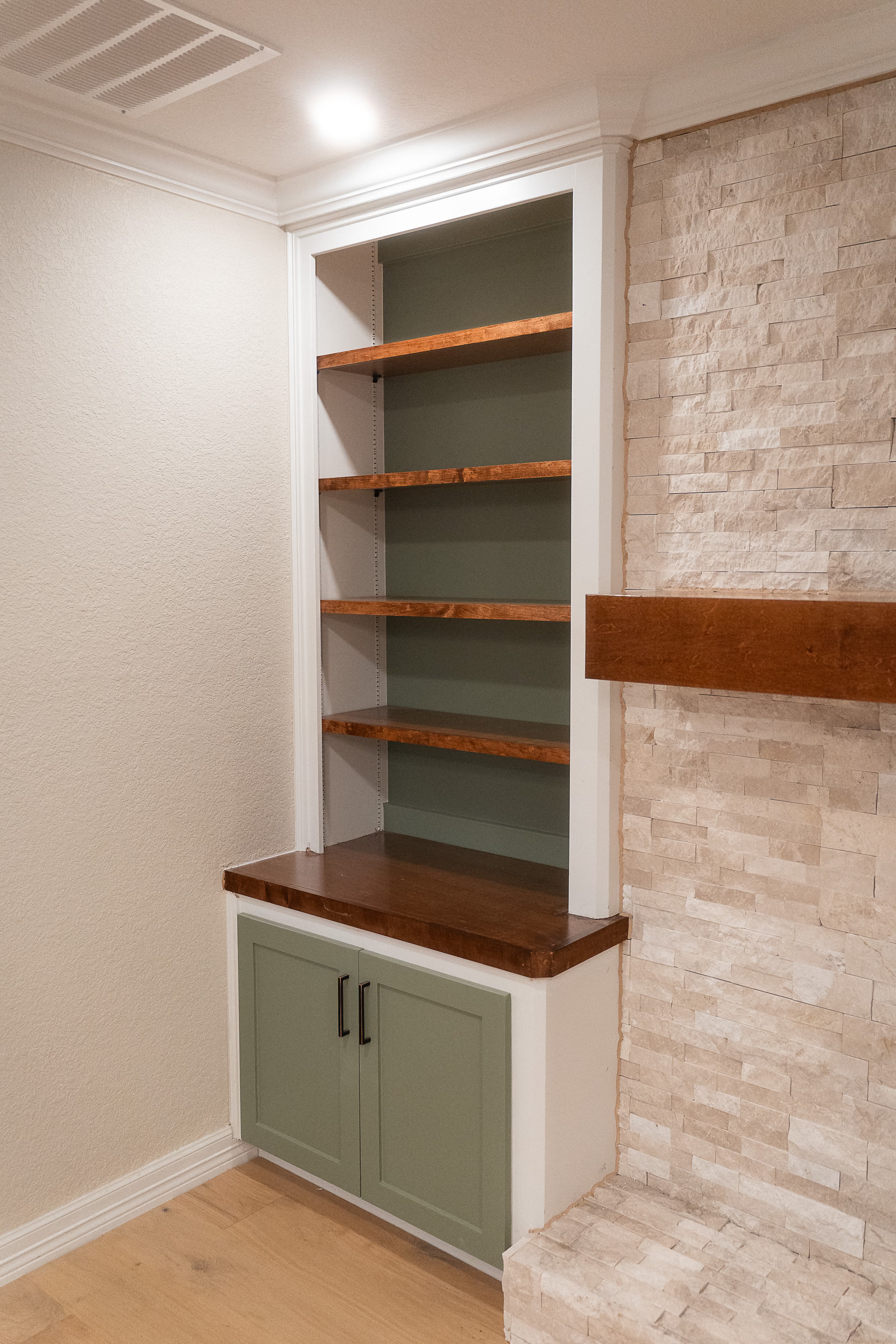
When a major loss event forces a commercial property into full or partial reconstruction, it creates a unique opportunity. Rather than simply rebuilding what existed before, forward-thinking property owners and managers use the reconstruction window to execute planned capital improvements that increase asset value, improve energy efficiency, and bring the building into compliance with current codes. Precision Restoration of Texas specializes in combining post-disaster reconstruction with strategic capital improvements, eliminating the need to schedule and manage separate projects. We have executed capital improvement projects across a wide range of commercial property types in the Houston area, including office building interior renovations, retail space reconfigurations, multi-family common area upgrades, and full commercial kitchen rebuilds following fire damage. Our project managers work directly with ownership groups and property management companies to develop detailed scopes of work, realistic timelines, and transparent budgets.
A repair restores a commercial property to its previous condition, while a capital improvement adds value, extends the useful life of the property, or adapts it to a new use. For tax and accounting purposes, this distinction matters significantly. Capital improvements are typically capitalized on the balance sheet and depreciated over time, while repairs are expensed in the current period. Common examples of capital improvements include HVAC system replacements, roof replacements, electrical panel upgrades, ADA compliance modifications, and full interior renovations. A licensed commercial contractor can help property owners properly document and classify these projects.
The advantage of working with a restoration contractor who also handles capital improvements is continuity. We already know your building. We have already completed the damage assessment, coordinated with your insurance carrier, and managed the mitigation phase. Bringing us into the capital improvement phase eliminates the learning curve, reduces total project time, and provides a single point of accountability from the first day of cleanup to the final walkthrough. For property owners managing multiple assets in the Houston market, that kind of operational efficiency translates directly to cost savings and faster return to full occupancy.
.svg)