Black Mold in the Shower or Bathtub: Cleaning Job or Real Problem? A Houston Guide
Mold Remediation
Most bathroom mold is surface mildew on grout and caulk, and it is a cleaning job. Here is how to tell that from mold that means water is behind the wall.
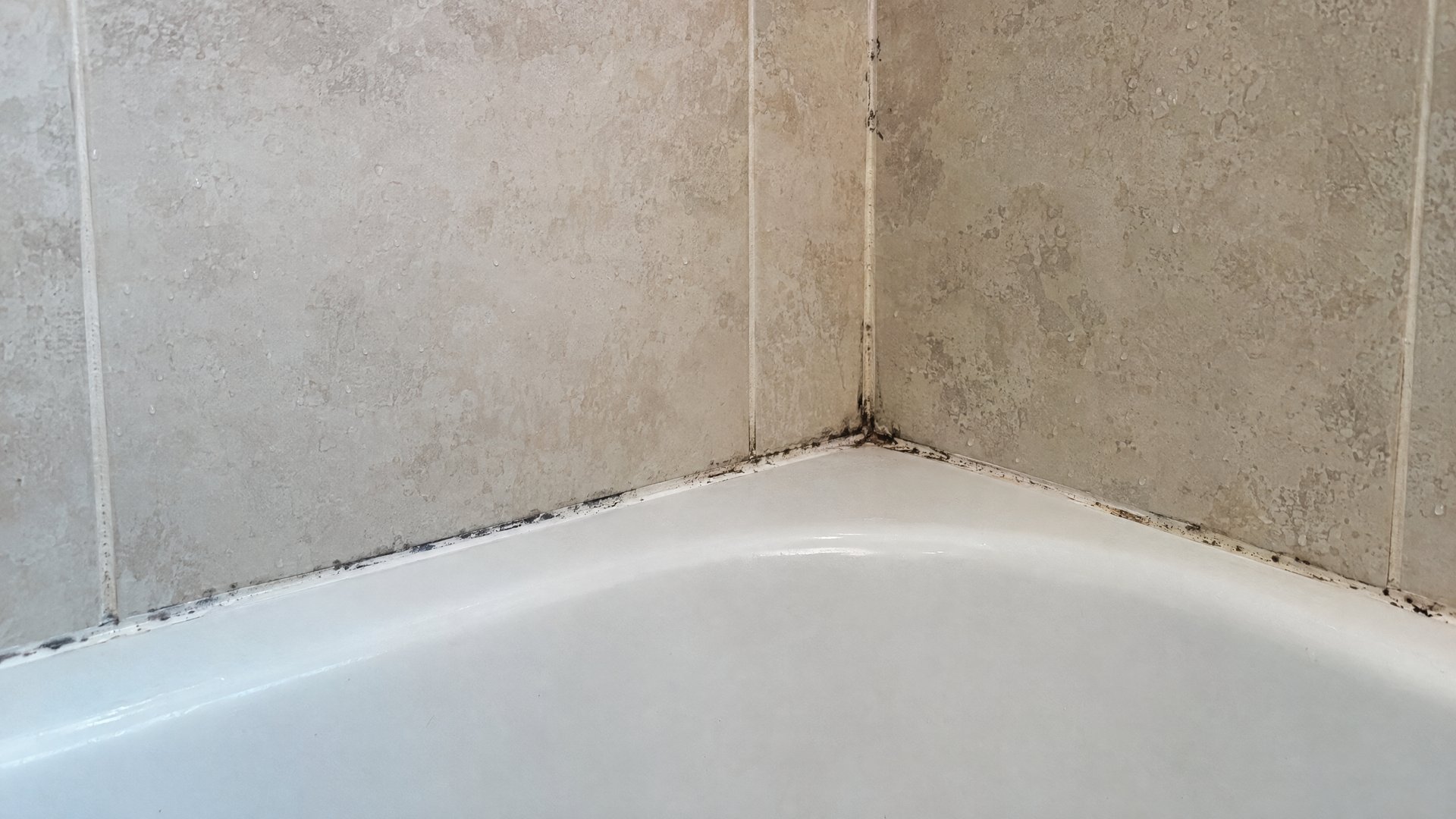
Most of what people call black mold in a bathroom is surface growth on caulk, grout, and silicone, and it is a cleaning job, not a remediation job. It grows there because those surfaces stay wet and a bathroom in Houston rarely gets dry, and it comes off. The problem is different when the growth is on the wall rather than on the seal, when it returns within days of a thorough cleaning, when the drywall outside the shower surround is soft or discolored, or when there is a musty smell that does not improve with ventilation. Those four signs mean water is getting behind the finished surface, and what you can see is a symptom of something inside the wall.
We would rather tell you to buy a $12 cleaner than sell you a remediation you do not need, so here is the honest way to sort one from the other.
Why Houston Bathrooms Grow This So Reliably
A bathroom is the only room in the house intentionally flooded with hot water every day. Add the regional baseline, which is months of high outdoor humidity, and the drying conditions are poor even when everything is working correctly.
The specific failure points, in order of how often we find them:
- Silicone caulk at the tub or shower base. It is a consumable. It shrinks, pulls away at the corners, and once there is a hairline gap, water gets behind it every single shower.
- Grout. Grout is porous unless sealed, and sealer wears off. Wet grout stays wet in a room that does not ventilate.
- A bath fan that does not do anything. Either it was never ducted to the outside, which is more common than it should be, or it vents into the attic, or nobody runs it long enough. A fan that shuts off with the light switch runs for the length of the shower and no longer, which is when the room needs it least.
- The shower pan. The failure that actually matters. A cracked pan or a failed liner sends water under the floor rather than into the drain.
The first three are maintenance. The fourth is a restoration project.
The Four Signs It Is More Than Surface Mildew
- What you see: Location; Likely surface growth: On caulk, grout lines, silicone seals; Likely a moisture problem: On painted drywall, at the base of the wall, outside the surround
- What you see: After cleaning; Likely surface growth: Gone, stays gone for weeks or months; Likely a moisture problem: Back within days
- What you see: Texture of the wall; Likely surface growth: Firm everywhere; Likely a moisture problem: Soft, spongy, or bubbling paint anywhere
- What you see: Smell; Likely surface growth: Fades with ventilation; Likely a moisture problem: Musty smell persists, sometimes stronger in the room below
- What you see: Ceiling below (second floor bath); Likely surface growth: Clean; Likely a moisture problem: Stained, discolored, or soft
- What you see: Flooring at the threshold; Likely surface growth: Tight and level; Likely a moisture problem: Lifting, cupping, or discolored grout at the edge
If everything in your situation sits in the left column, buy a bathroom cleaner and re-caulk. If two or more land in the right column, the drywall or the subfloor is involved and cleaning the surface will not change anything.
One more test that costs nothing: press firmly along the base of the wall just outside the shower and on the floor at the threshold. Anything that gives, flexes, or sounds different from the same material elsewhere means water has been in it.
How to Clean Surface Mildew Properly
For genuine surface growth on non-porous seals and tile, this is a Saturday.
Ventilate the room first, and keep it ventilated throughout. Use a bathroom cleaner or a detergent solution and a stiff brush, scrub the grout lines and seals, rinse, and then dry the surfaces completely rather than letting them air dry.
A few things worth knowing:
- Bleach is not the answer you think it is. The EPA states that using a chemical or biocide that kills organisms such as chlorine bleach "is not recommended as a routine practice during mold cleanup." On porous material it is mostly water, which is the opposite of helpful. On stained caulk it may lighten the color without removing the growth, which looks like success and is not.
- Never mix bleach with ammonia-based cleaners. The EPA warns this can produce toxic fumes. Bathroom cleaners commonly contain ammonia, so this is a real risk rather than a theoretical one.
- Stained caulk does not clean. Once growth is inside the silicone rather than on it, the only fix is removal and replacement. Cut it out, dry the joint completely, and re-caulk with a mildew-resistant silicone.
- Fix the drying problem or you will do this again. Run the exhaust fan for 20 to 30 minutes after the shower, not just during it. A timer switch costs very little and solves the behavior problem permanently. Confirm the fan actually vents outside, not into the attic.
When It Is the Shower Pan
This is the failure that turns a bathroom into a restoration project, and it is quiet. A leaking pan sends water under the tile, into the subfloor, and then downward or outward along the framing. Nothing about it is visible in the shower itself.
On a second floor it announces itself on the ceiling below, usually as a stain that appears or grows only after someone showers. On a slab it is harder, and the signs are lifting flooring outside the bathroom door, a musty smell in an adjacent closet, or baseboard that is soft at the bottom.
The confirmation is a moisture reading rather than a guess. Thermal imaging shows the temperature signature of a wet assembly, and a meter confirms whether material is actually wet or just cool. One of our technicians inspected a customer's walls and vents for mold recently, found none, and told them so. That is a legitimate outcome and it takes about the same amount of time as finding a problem.
The Texas Threshold, and the Other Number
If there is real growth behind the wall, the extent decides what kind of project this is.
- Under about 10 square feet: EPA guidance says that in most cases you can handle a moldy area smaller than roughly a 3 foot by 3 foot patch yourself.
- At or above 25 contiguous square feet: Texas mold rules require a licensed remediation contractor, a written protocol, containment, and a clearance assessment performed by a separate licensed party. The rules prohibit one licensee from doing both the assessment and the remediation on the same project.
Bathroom jobs frequently land under the Texas threshold, which is why the honest first step is measuring the affected area rather than quoting a scope. A wall cavity behind a shower is often a contained, modest project. It is the ones that reached the subfloor or traveled into the adjacent room that grow.
What a Bathroom Remediation Actually Involves
When it is warranted: containment of the bathroom with plastic and negative air pressure so nothing migrates into the rest of the house, HEPA air scrubbers running throughout, removal of affected porous material including drywall and any wet insulation, cleaning and HEPA vacuuming of framing and non-porous surfaces, and correction of the water source, which in a bathroom means the pan, the plumbing, or the waterproofing behind the tile.
Then the rebuild: cement board or the appropriate substrate, waterproofing done correctly this time, tile, grout, paint, and trim. We handle both halves, which matters here more than in most rooms, because a bathroom that is remediated and then re-tiled by someone who does not waterproof properly is simply on a timer.
Frequently Asked Questions About Bathroom and Shower Mold
Is the black stuff in my shower toxic black mold?
Usually not. Most bathroom surface growth is common mildew on caulk and grout, and several dark molds get called black mold loosely. The species matters less than whether it is on the surface or coming from water inside the wall.
Why does it come back a week after I clean it?
Either the growth is inside porous caulk rather than on it, in which case the caulk needs replacing, or water is reaching the area from behind and cleaning the surface never addressed the source.
Will bleach kill it for good?
No. The EPA does not recommend biocides such as chlorine bleach as a routine practice during mold cleanup, and bleach cannot reach growth inside porous material. Cleaning plus drying plus fixing the moisture source is what lasts.
Do I need to test the mold in my bathroom?
Rarely. EPA guidance is that if visible mold growth is present, sampling is usually unnecessary. What is worth measuring is moisture, because that tells you whether this is a surface problem or a wall problem.
How do I know if my shower pan is leaking?
Watch whether damage below or beside the bathroom worsens specifically after showers. On a second floor, a ceiling stain that grows after use is the clearest signal. A moisture reading confirms it without demolition.
Can I remodel over it instead of remediating?
Not safely. Tiling over affected substrate seals growth into a wet assembly and it will surface again. If the area needs remediation, it happens before the rebuild, not instead of it.
Not Sure Which One You Have? A Reading Settles It in Minutes
If your bathroom mold keeps coming back, or the wall outside the shower feels soft, or there is a stain on the ceiling below, the answer is a moisture measurement rather than another round of cleaning. We will tell you plainly if what you have is a cleaning job, and several homeowners in Spring and The Woodlands have gotten exactly that answer from us at no charge.
We serve Houston, Spring, The Woodlands, Conroe, Katy, Cypress, Kingwood, Humble, Tomball, Magnolia, Montgomery, Porter, Splendora, Sugar Land, Jersey Village, Pasadena, League City, and Galveston.
Call (346) 209-2992 or visit pro-texas.com to schedule an assessment. We are veteran-owned, locally focused, and Aiming for Excellence in every step of the restoration process.
Explore Mold Remediation, Water Damage Restoration, Reconstruction & Remodeling, and Certifications & Licenses for related help from Precision Restoration of Texas.