.avif)

How to Tell If You Have Mold in Your Walls: 7 Warning Signs
Mold Remediation
Mold growing inside walls is one of the most common and potentially serious problems facing Houston area homeowners, and it often develops without any visible signs until the problem has become significant. Knowing the warning signs of hidden mold growth allows Spring TX and Houston area homeowners to identify potential problems early and take action before the mold spreads further and causes more extensive damage. This article covers the seven most important warning signs of mold in your walls, explains what causes hidden mold growth in Houston area homes, and describes when professional mold assessment and remediation is necessary.


Why Mold Grows Inside Walls in Houston Area Homes
Houston's warm, humid climate creates ideal conditions for mold growth inside walls wherever moisture is present. The most common causes of hidden wall mold in Houston area homes include plumbing leaks inside wall cavities, roof leaks that allow water to run down interior wall framing, HVAC condensation and duct leaks, and water intrusion through exterior walls during heavy rain events. Once moisture enters a wall cavity and contacts organic materials like drywall paper and wood framing, mold can begin growing within 24 to 48 hours — entirely out of sight.
Warning Sign 1: Musty or Earthy Odor
A persistent musty or earthy odor that does not go away with cleaning or ventilation is one of the most reliable indicators of hidden mold growth in Houston area homes. Mold produces volatile organic compounds (MVOCs) as part of its metabolic process, and these compounds create the characteristic musty smell associated with mold. If you notice a musty odor in a particular room or area of your home that persists regardless of cleaning efforts, hidden mold growth in the walls or under the floor is a strong possibility.
Warning Sign 2: Visible Discoloration on Walls or Ceilings
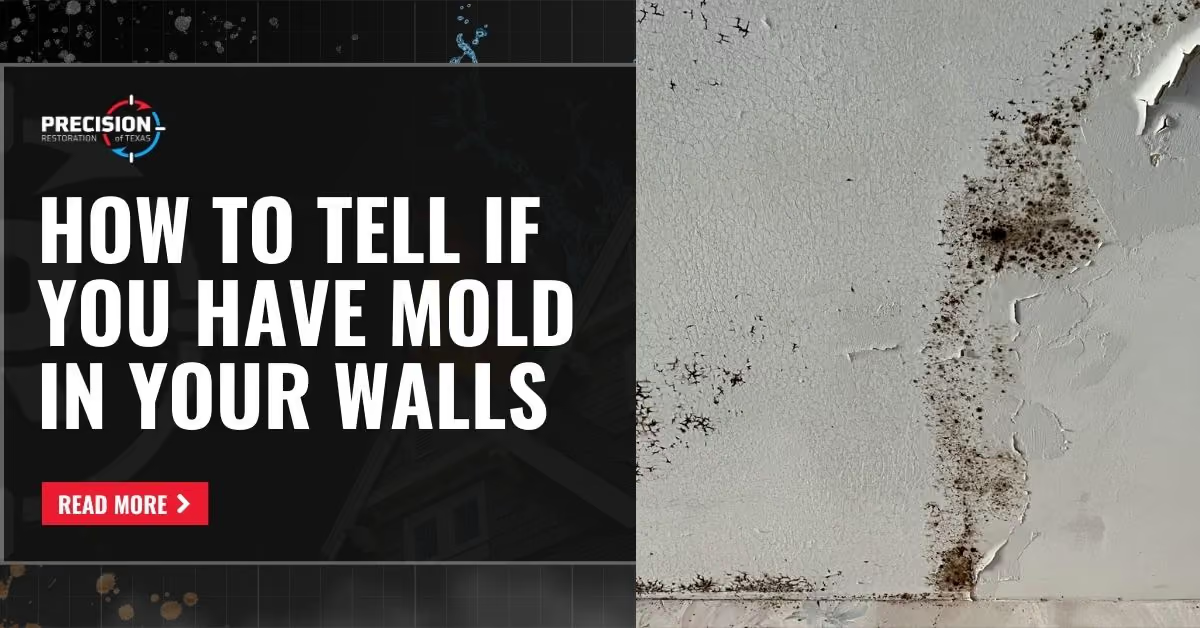
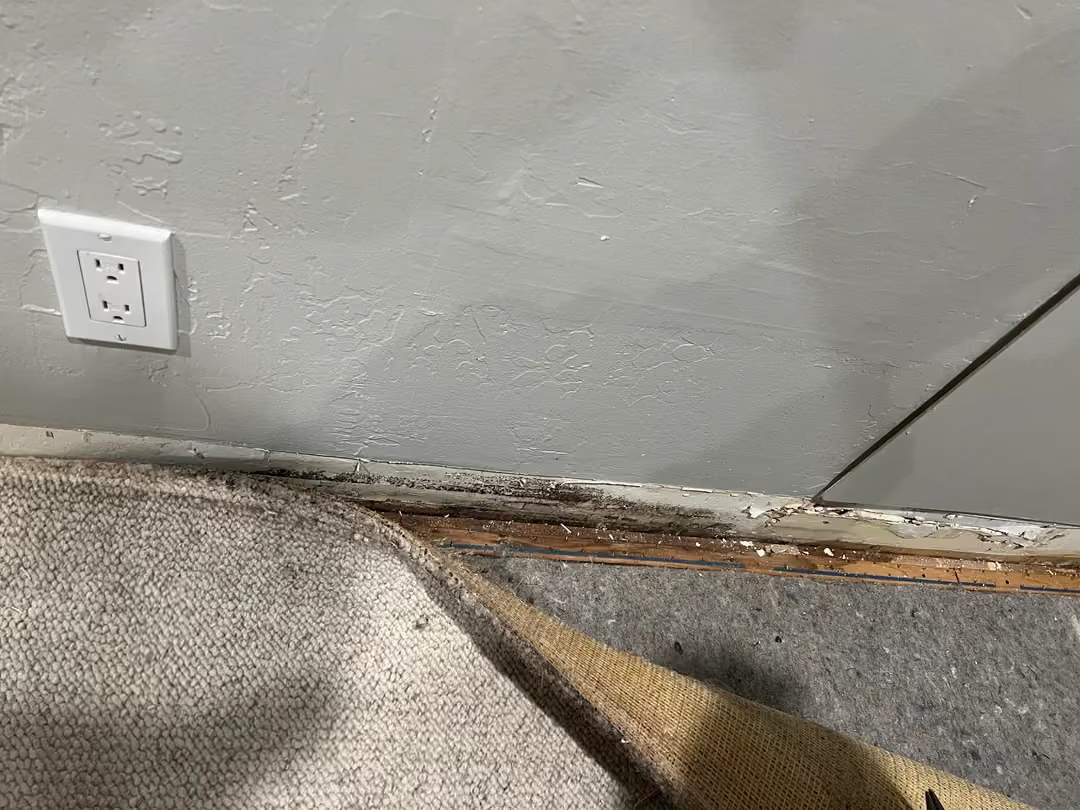
Discoloration on walls or ceilings — particularly dark spots, staining, or areas where paint is bubbling or peeling — can indicate moisture intrusion and potential mold growth behind the surface. In Houston area homes, water stains on walls or ceilings often indicate a leak above or behind the affected area. Even if the staining appears dry, mold may be actively growing in the damp materials behind the surface. Do not ignore wall or ceiling discoloration — have it investigated by a professional.
Warning Sign 3: Warping or Buckling Walls
Walls that appear warped, buckled, or bowed outward are a sign of moisture damage to the structural materials behind the surface. When drywall and wood framing absorb moisture, they expand and distort. This physical deformation is a clear indicator that moisture has been present in the wall cavity long enough to cause structural changes — and likely long enough for mold to have established itself as well.
Warning Sign 4: Unexplained Health Symptoms
Allergy-like symptoms — nasal congestion, sneezing, coughing, eye irritation, and skin irritation — that improve when you leave the home and worsen when you return are a classic indicator of indoor mold exposure. If members of your household experience persistent respiratory symptoms that cannot be explained by seasonal allergies or illness, hidden mold growth in the walls of your Houston area home may be the cause. Children, elderly individuals, and people with asthma or compromised immune systems are particularly sensitive to mold exposure.
Warning Sign 5: Recent Water Damage That Was Not Professionally Dried
If your Houston area home has experienced water damage — from a plumbing leak, appliance failure, roof leak, or flooding — that was not professionally dried, hidden mold growth in the affected walls is a significant risk. Many homeowners dry the visible surfaces after a water damage event without addressing the moisture that has penetrated into wall cavities and structural materials. This hidden moisture creates ideal conditions for mold growth that may not become apparent for weeks or months after the initial water event.
Warning Sign 6: Rust or Corrosion on Metal Components
Rust or corrosion on metal components inside walls — visible at electrical outlets, plumbing penetrations, or where pipes pass through walls — indicates that moisture has been present in the wall cavity. Corrosion requires sustained moisture exposure to develop, which means that by the time you see rust on metal components, the wall cavity has likely been damp long enough for mold to have grown.
Warning Sign 7: Crumbling or Soft Drywall
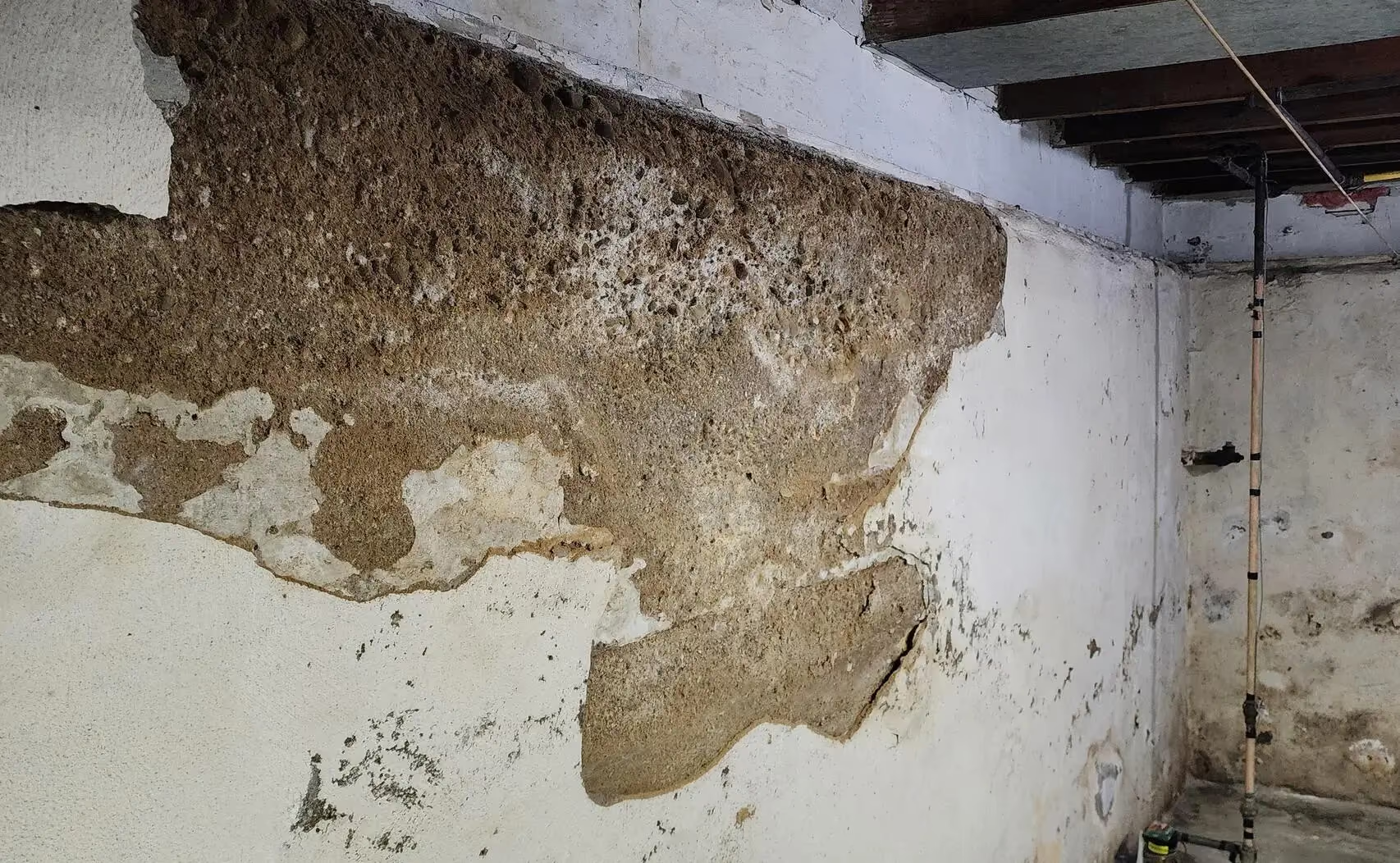
Drywall that feels soft, crumbles easily, or has a spongy texture when pressed has been saturated with moisture. Saturated drywall is a prime substrate for mold growth and typically indicates an ongoing or past moisture intrusion problem. If you notice areas of soft or crumbling drywall in your Houston area home, have the area professionally assessed for mold before attempting any repairs.
What to Do If You Suspect Mold in Your Walls
If you notice any of these warning signs in your Houston area home, contact Precision Restoration for a professional mold assessment. Do not attempt to open walls yourself to investigate — disturbing mold-affected materials without proper containment can spread mold spores throughout the property. Our team uses moisture meters, thermal imaging cameras, and professional assessment techniques to identify hidden mold growth and determine the appropriate remediation approach for your Spring TX or Houston area property.