.avif)

The First 72 Hours After a House Fire in Houston TX: What to Do and What to Avoid
Fire & Smoke Damage
Fire damage keeps working after the flames are out. What the first 72 hours require in a Houston home, including the HVAC mistake that spreads soot everywhere.
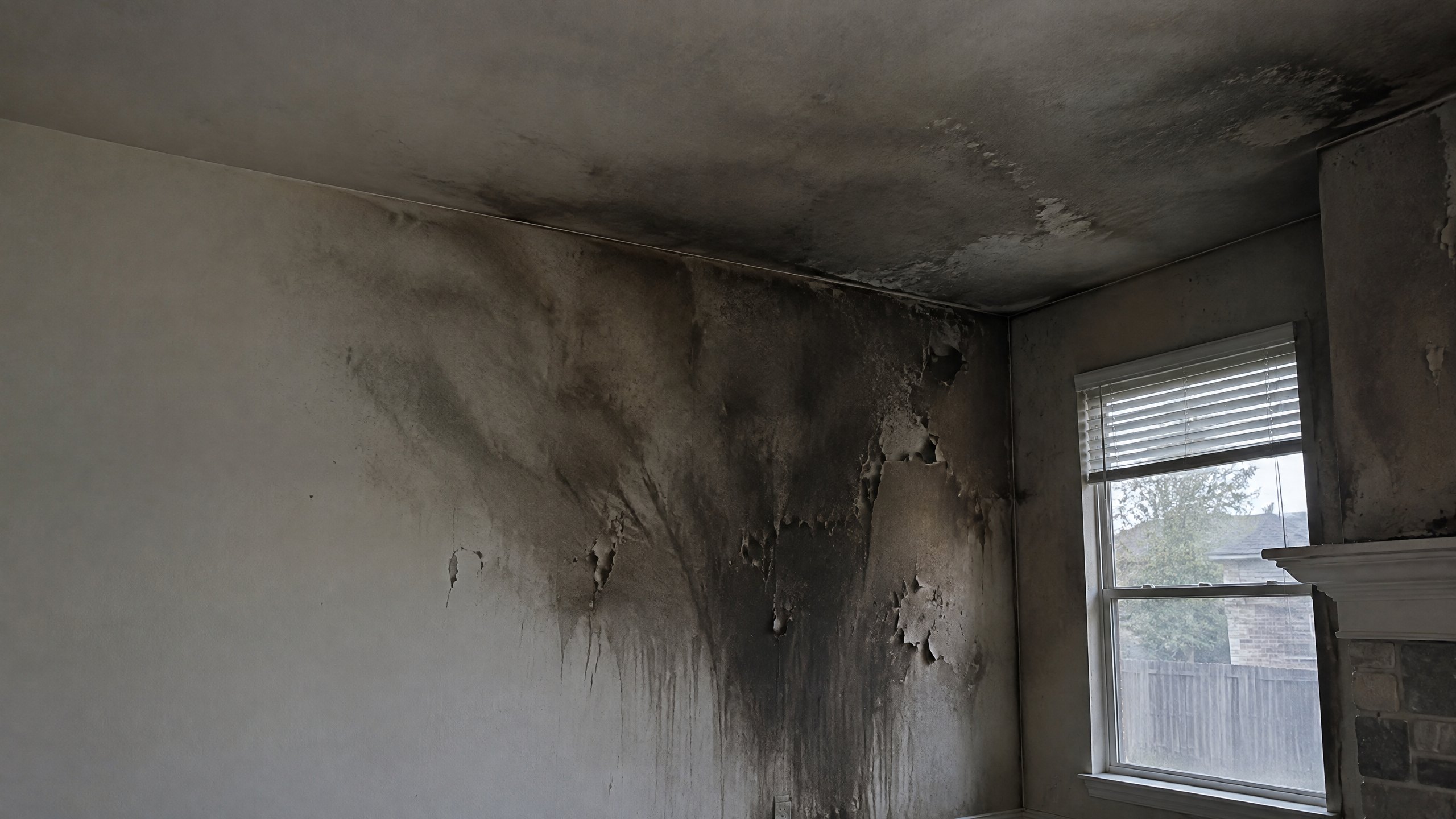
Fire damage does not stop when the fire is out. Soot residues from burned synthetics are chemically active, and on unprotected metal, stone, and finished surfaces they begin etching and corroding within days. At the same time, the water the fire department used is now a water loss of its own, and in a Houston summer the mold clock starts within 24 to 48 hours. The first 72 hours are not about cleaning. They are about stabilizing the building, keeping soot from spreading, and getting wet materials drying before two losses become three.
Nobody is at their best in the hours after a fire. What follows is the short version of what matters, in the order it matters, so you can act on it without having to think clearly.
The First Few Hours: Safety and Access
Do not re-enter until the fire department releases the structure. That is not a formality. Fires compromise framing, joists, and stair systems in ways that are not visible, and smoke-filled spaces can hold carbon monoxide and other combustion gases long after the visible smoke clears.
When you do get in, with authorization:
- Leave the utilities off until an electrician and the gas utility clear them. Wiring inside a fire-affected wall can have damaged insulation even where nothing looks burned.
- Do not turn on the HVAC. This is the most expensive mistake available to you in the first day, and it is covered in its own section below.
- Retrieve only what you need: medications, identification, financial documents, phones and chargers, and anything irreplaceable you can carry.
- Photograph everything before anything moves. Every room, every wall and ceiling, the origin area, the contents. Wide shots and close shots.
Then call your insurer and open the claim. Texas gives the carrier 15 business days to acknowledge receipt, and 15 business days after it receives the information it requested to accept or reject the claim, extendable by 45 days if it explains in writing. Ask immediately about additional living expenses coverage, which pays for temporary housing and the increased cost of living while you are displaced. That coverage usually starts the day of the loss, and it pays for hotels, meals above your normal spend, laundry, and pet boarding.
The HVAC Mistake That Turns One Room Into a Whole House
If the air handler runs after a fire, it pulls soot-laden air through the return, distributes it through every duct run, and deposits residue in every room in the house, including rooms the fire never reached. A contained kitchen fire becomes a whole-home cleaning project, and the ductwork itself becomes part of the scope.
Turn the system off at the thermostat and at the breaker, and leave it off. If the weather demands cooling or heating before the system is cleared, ask your restoration contractor about temporary equipment instead. ANSI/IICRC S700, the fire and smoke damage restoration standard published January 2, 2025, addresses HVAC systems as a distinct component of fire restoration for precisely this reason.
The same logic applies to your own movement through the house. Soot transfers on shoes and clothing. Restoration crews set clean paths and use containment to keep unaffected areas unaffected, and it works only if the traffic is controlled from the beginning.
Do Not Start Cleaning Soot Yourself
Instinct says get a sponge and some cleaner and start on the walls. Instinct is wrong here, and this is the single most common way homeowners convert a restorable surface into a replaceable one.
Soot particles from modern household fires are largely oily and carbon-based, and they sit on the surface until something drives them in. Wiping dry soot with a wet cloth emulsifies it and pushes it into the pores of paint, drywall, grout, and upholstery, where it is no longer removable. Professional crews use dry cleaning methods first, chemical sponges and HEPA vacuuming, and only then move to wet methods with agents selected for the residue type.
The other reason to wait: your claim. Contents cleaning, contents replacement, and structural cleaning are separate scopes, and the evidence for all three is the condition the crew documents on arrival.
Things you can safely do in the first 72 hours:
- Open windows for ventilation if outdoor conditions allow and the building is secure.
- Remove undamaged contents from unaffected rooms before soot migrates.
- Change your HVAC filter and leave the system off.
- Empty the refrigerator and freezer if power was lost, and document contents before disposal, since food spoilage is often a covered loss.
- Cover upholstered furniture in unaffected rooms with clean sheets.
The Water Damage Nobody Budgets For
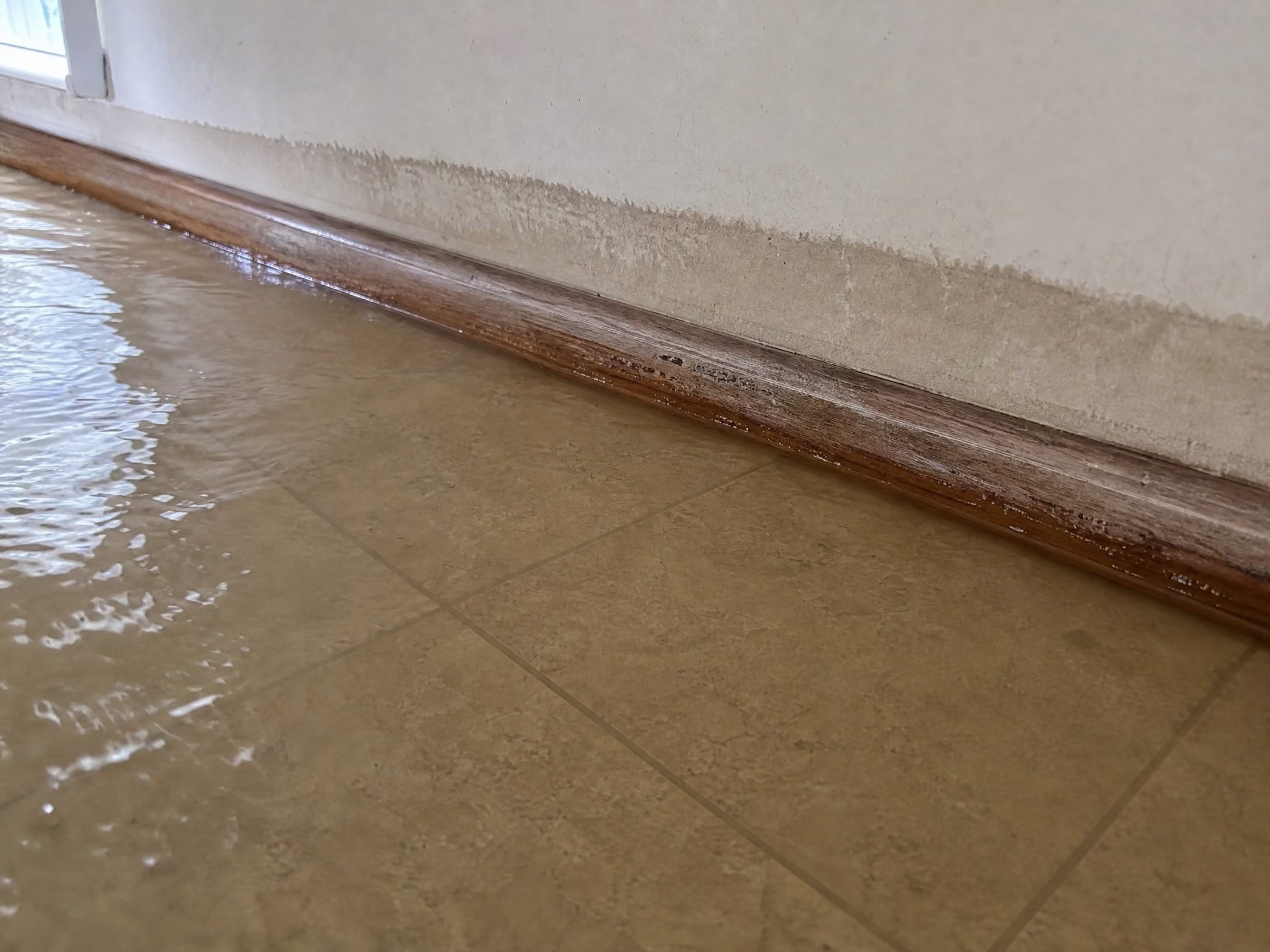
A structure fire of any size is fought with water, and that water goes into the ceiling assemblies, down the wall cavities, and into the flooring and subfloor. It is often the larger portion of the claim, and it is frequently the part that gets addressed last because the fire damage is what everyone is looking at.
In this climate, the delay matters. Mold growth can begin within 24 to 48 hours on wet cellulose material, and a house that is sitting open in August with no air conditioning is a nearly ideal environment for it. Extraction and structural drying should start as soon as the structure is safe and secured, and they should run in parallel with soot mitigation, not after it.
There is a related trap: the smell. Fire odor and mold odor are both persistent, and once they are layered on top of each other, identifying whether an odor complaint six weeks later is smoke residue in the duct system or microbial growth in a wall cavity becomes genuinely difficult. Drying early keeps the two problems separate.
Securing the Property
Board-up and tarping are not cosmetic, and most policies require you to take reasonable steps to protect the property from further damage. An open roof or a broken window after a fire means the next Gulf Coast rain adds a new loss, and an unsecured structure is an insurance and liability problem of its own.
Emergency board-up, roof tarping, and temporary fencing generally fall under the claim as mitigation, and a restoration contractor can handle it the same day. Keep every receipt for anything you pay out of pocket in these first days, including hotel, meals, and supplies. Those reimbursements are part of the claim and they are commonly lost for lack of documentation.
Frequently Asked Questions About Fire Damage in Houston TX
How soon should restoration start after a fire?
As soon as the structure is released and secured, ideally within 24 hours. Soot residues become progressively harder to remove, and firefighting water starts a separate mold clock within about two days.
Can smoke odor really be removed, or does it always come back?
It can be removed, but only if every reservoir is addressed: duct systems, insulation, contents, and porous materials. Odor that returns weeks later almost always means a reservoir was sealed in rather than removed.
Is my home a total loss if the fire was contained to one room?
Usually not. Most contained fires produce a structural repair scope plus a much wider soot and odor scope. The determining factor is structural damage to framing and systems, not the size of the burned area.
Who pays for the temporary housing?
Additional living expenses coverage in your homeowners policy, up to your policy's limits and time caps. Keep receipts for lodging, meals above normal, laundry, and pet boarding from day one.
Should I clean my clothes and furniture myself?
No. Textiles require specialized processes such as ozone or hydroxyl treatment and commercial laundering. Home washing frequently sets smoke odor into fabric permanently and makes the item unrestorable.
What about the food and medications in the house?
Discard food exposed to smoke, heat, or a power outage, and replace medications and cosmetics that were exposed. Document everything with photos before disposal so it can be claimed.
Fire or Smoke Damage in the Houston Area? Call Our 24/7 Dispatch
We respond around the clock for emergency board-up, soot and odor mitigation, structural drying of firefighting water, contents handling, and the full reconstruction that follows. One contractor from the first tarp to the final coat of paint, so nothing falls into the gap between phases.
We serve Houston, Spring, The Woodlands, Conroe, Katy, Cypress, Kingwood, Humble, Tomball, Magnolia, Montgomery, Porter, Splendora, Sugar Land, Jersey Village, Pasadena, League City, and Galveston.
Call (346) 209-2992">(346) 209-2992 or visit pro-texas.com to schedule an assessment. We are veteran-owned, locally focused, and Aiming for Excellence in every step of the restoration process.
Explore Fire & Smoke Damage, Commercial Fire Damage, Reconstruction & Remodeling, and HVAC & Air Duct Cleaning for related help from Precision Restoration of Texas.