.avif)

Mold Remediation in Cypress TX

Mold Remediation
Hidden mold after a leak or flood in Cypress TX? Precision Restoration provides IICRC-certified mold inspection, containment, and full remediation. Call (346) 209-2992 today.
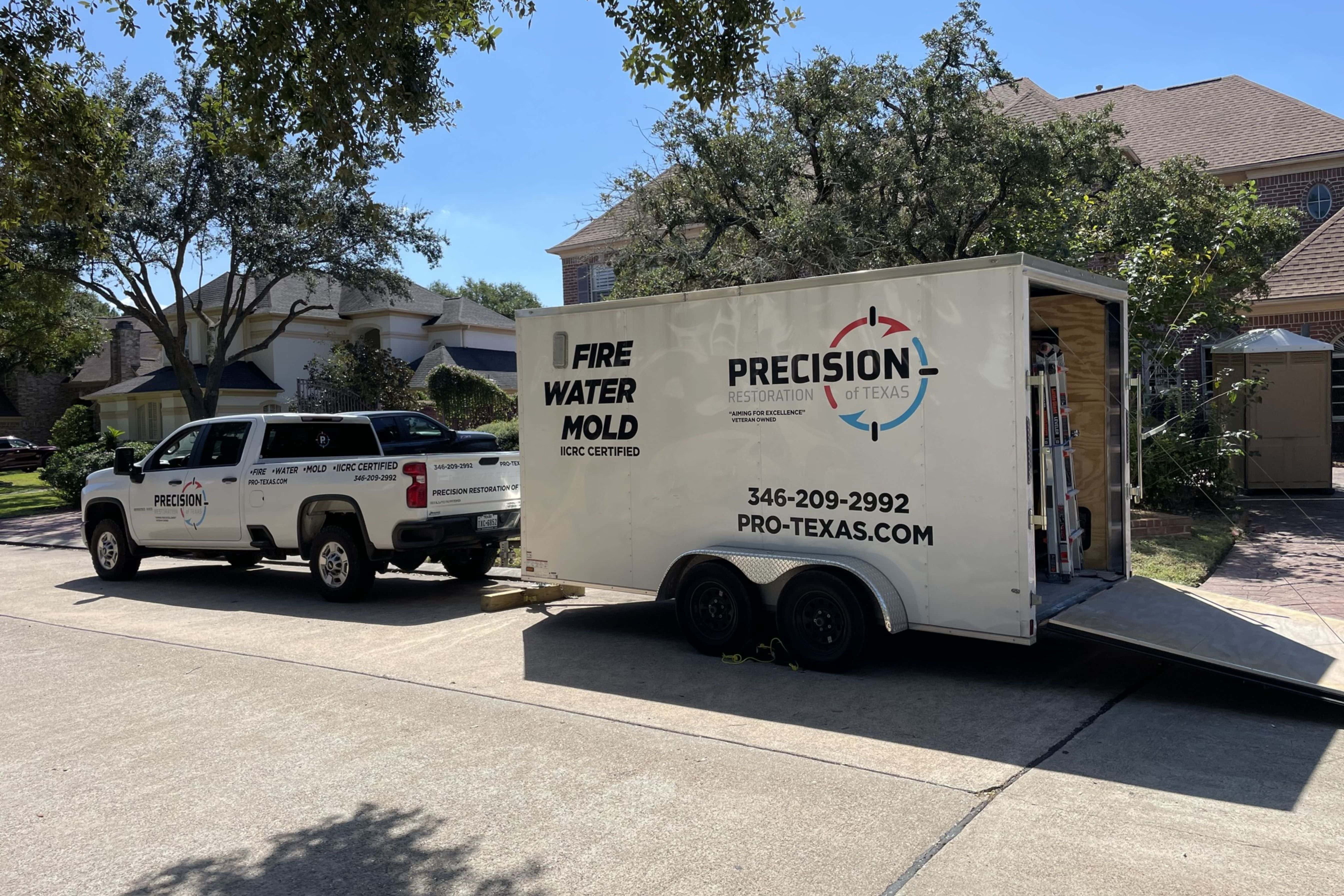
Mold remediation in Cypress TX is a more common need than most homeowners realize. Cypress sits in Harris County, one of the most flood-prone counties in the United States, and the combination of high annual rainfall, warm temperatures, and the humidity that defines the Gulf Coast creates near-perfect conditions for mold growth inside residential and commercial properties. What makes mold particularly insidious in Cypress TX homes is that it rarely announces itself immediately. A slow plumbing leak, a roof penetration that drips into the attic after every rain, or a flood event that was dried quickly but not completely — these are the scenarios that lead to hidden mold colonies growing silently inside wall cavities, under flooring, and in crawl spaces for weeks or months before they are discovered. Precision Restoration of Texas provides professional mold remediation services throughout Cypress TX, following IICRC S520 standards for mold remediation to ensure that every colony is identified, contained, removed, and verified as clear.
Why Cypress TX Homes Are Especially Vulnerable to Mold Growth
The environmental conditions in Cypress TX are among the most favorable for mold growth anywhere in the country. Mold requires three things to thrive: moisture, a food source (any organic material, including drywall paper, wood framing, and insulation), and temperatures above 40 degrees Fahrenheit. Cypress TX provides all three in abundance. The area's history of significant flooding events — including the devastating impacts of Hurricane Harvey in 2017 — means that many Cypress TX homes have experienced water intrusion that may not have been completely and professionally remediated. Even homes that were "dried out" after a flood event may have residual moisture in wall cavities or under slabs that was never fully addressed. This residual moisture is a time bomb for mold growth. Beyond flooding, the everyday humidity in Cypress TX creates conditions where HVAC systems work overtime to manage indoor moisture. Aging or undersized HVAC systems, duct leaks that allow humid attic air to enter the living space, and inadequate bathroom or kitchen ventilation all contribute to elevated indoor humidity that supports mold growth even without a specific water event.
Top Signs You Have Hidden Mold Behind Your Walls in Cypress TX
Identifying hidden mold is not always straightforward, but there are reliable warning signs that Cypress TX homeowners should know: Persistent musty odor. The most reliable indicator of hidden mold is a musty, earthy smell that does not go away with cleaning or ventilation. This odor is produced by microbial volatile organic compounds (MVOCs) released by actively growing mold colonies. If you can smell it, there is mold growing somewhere. Unexplained respiratory symptoms. Mold exposure commonly causes nasal congestion, sneezing, coughing, eye irritation, and throat irritation. If these symptoms improve when you leave the house and return when you come back, mold in your home is a likely cause. Visible discoloration on walls or ceilings. Dark spots, staining, or discoloration on drywall, ceiling tiles, or around windows can indicate mold growth on or just behind the surface. Note that mold is not always black — it can be green, white, gray, or brown. Bubbling, peeling, or warping paint or wallpaper. These are signs of moisture behind the surface, which is the precursor to mold growth if not already present. Recent water damage that was not professionally dried. Any water intrusion event — a burst pipe, a roof leak, an appliance failure, or a flood — that was not addressed by a professional drying company within 24 to 48 hours has a high probability of resulting in mold growth. Warped or soft flooring. Subfloor materials that have absorbed moisture will often cause surface flooring to warp, buckle, or feel soft underfoot. This is a sign of significant moisture in the floor assembly, which almost certainly means mold is present.
The Health Risks of Ignoring Mold in Your Cypress TX Home
Mold is not merely an aesthetic problem or a source of unpleasant odors. Certain mold species produce mycotoxins — toxic compounds that can cause serious health effects with prolonged exposure. The most commonly discussed is Stachybotrys chartarum, commonly known as black mold, which produces trichothecene mycotoxins associated with respiratory illness, neurological symptoms, and immune suppression. However, it is important to understand that many mold species other than Stachybotrys can cause significant health problems, particularly for vulnerable populations including children, the elderly, pregnant women, and individuals with asthma, allergies, or compromised immune systems. The Centers for Disease Control and Prevention (CDC) recommends that all indoor mold growth be remediated regardless of species, because the health risks are not worth waiting to determine the exact type. Prolonged mold exposure in Cypress TX homes has been linked to chronic sinusitis, persistent coughing, asthma exacerbation, skin rashes, fatigue, and in severe cases, hypersensitivity pneumonitis — a serious lung condition. Do not wait for a diagnosis to address mold in your home.
Professional Mold Remediation vs. Bleach: What Actually Works?
A persistent myth in home maintenance is that bleach kills mold. This is only partially true and dangerously misleading. Bleach can kill mold on non-porous surfaces like tile or glass. However, on porous materials like drywall, wood, and grout, bleach cannot penetrate deeply enough to kill mold at its roots. The surface may appear clean while the mold continues to grow beneath. Additionally, bleach does not address the moisture source that is allowing mold to grow — meaning the mold will return even if the surface treatment temporarily suppresses it. Professional mold remediation in Cypress TX involves a fundamentally different approach: Moisture source identification. Before any mold is removed, the source of the moisture feeding it must be identified and corrected. Without this step, remediation is temporary. Containment. Affected areas are sealed with polyethylene sheeting and negative air pressure is established to prevent mold spores from spreading to unaffected areas during removal. Physical removal. Mold-affected porous materials — drywall, insulation, carpet, and in some cases wood framing — must be physically removed and disposed of as contaminated waste. No cleaning product can substitute for removal of heavily contaminated porous materials. HEPA vacuuming and antimicrobial treatment. After material removal, all surfaces are HEPA vacuumed and treated with EPA-registered antimicrobial agents. Air scrubbing. HEPA air scrubbers run continuously throughout the remediation process and for a period after completion to capture airborne spores. Clearance testing. A post-remediation verification (PRV) inspection confirms that spore counts in the treated area have returned to acceptable levels before containment is removed.
Frequently Asked Questions About Mold Remediation in Cypress TX
Q: How much does mold remediation cost in Cypress TX?
A: The cost of mold remediation in Cypress TX varies based on the size of the affected area, the materials involved, and the extent of the mold growth. Small, contained areas may cost a few hundred dollars, while whole-home remediation following a flood event can cost several thousand dollars. Precision Restoration provides free assessments and detailed written estimates.
Q: Is mold remediation covered by homeowner's insurance in Texas?
A: Coverage depends on the cause of the mold. If the mold resulted from a covered water damage event — such as a burst pipe — the remediation is typically covered. Mold resulting from long-term neglect or gradual leaks is often excluded. Precision Restoration works with your insurer to maximize your covered claim.
Q: How long does mold remediation take?
A: Most residential mold remediation projects in Cypress TX take two to five days, depending on the extent of the contamination. Larger or more complex projects may take longer.
Q: Do I need to leave my home during mold remediation?
A: For small, well-contained mold remediation projects, it may be possible to remain in unaffected areas of the home. For larger projects involving significant containment and air scrubbing, temporary relocation is recommended, particularly for children, the elderly, or individuals with respiratory conditions.
Q: Can mold come back after professional remediation?
A: Mold will not return if the moisture source has been properly identified and corrected, and if the remediation was performed to IICRC S520 standards. Precision Restoration always addresses the moisture source as part of the remediation process.
Suspect Mold in Your Cypress TX Property?
Do not ignore the signs. Mold grows fast in the Cypress TX climate, and early professional intervention is always less costly and less disruptive than waiting. Precision Restoration of Texas provides thorough, certified mold remediation services throughout Cypress TX and the greater Houston area. Call (346) 209-2992 for a professional mold assessment — available 24/7.