.avif)

What Is Water Damage Mitigation? A Complete Guide for Spring TX Homeowners

Water Damage
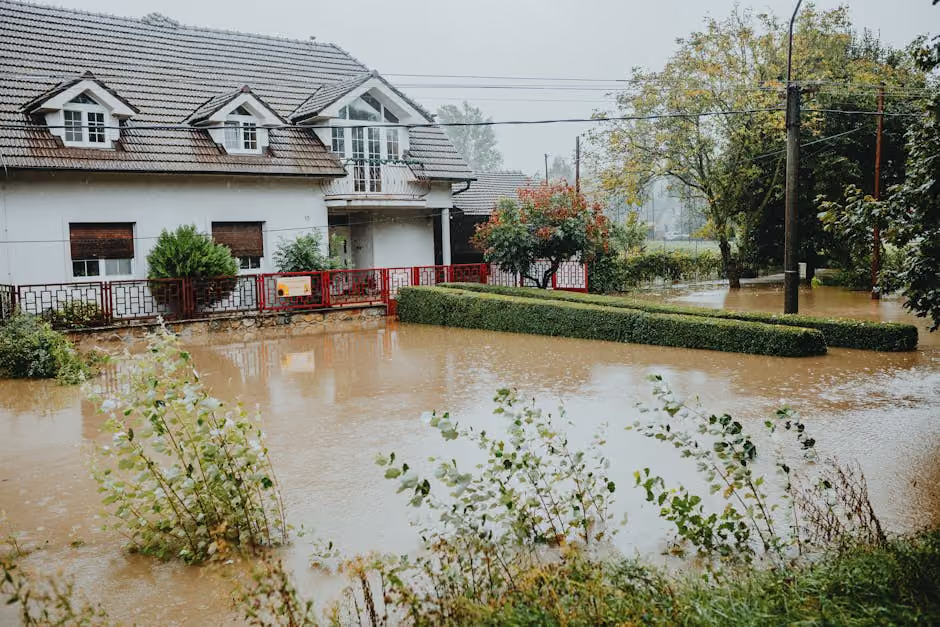
Water damage mitigation is the critical first phase of the water damage recovery process, encompassing all of the actions taken to stop ongoing damage and prevent further deterioration of a property after a water loss event. For Spring TX homeowners, understanding what water damage mitigation involves — and why it must begin as quickly as possible — is essential to making informed decisions after a water damage emergency. This complete guide explains the water damage mitigation process in detail, describes the professional equipment and techniques involved, and explains how Precision Restoration approaches mitigation for Spring TX residential and commercial properties.
Defining Water Damage Mitigation
Water damage mitigation refers to the emergency response actions taken immediately after a water loss event to stop ongoing damage and prevent further deterioration of the affected property. The term encompasses water extraction, structural drying, moisture mapping, content protection, antimicrobial treatment, and controlled demolition of materials that cannot be salvaged. Mitigation is distinct from restoration — mitigation stops the damage, while restoration repairs and rebuilds the property to its pre-loss condition. Both phases are necessary for a complete recovery from water damage in Spring TX.
Why Water Damage Mitigation Must Begin Immediately in Spring TX
In Spring TX's warm, humid climate, water damage mitigation must begin as quickly as possible after a water loss event. Mold can begin growing within 24 to 48 hours of water intrusion in Houston area conditions. Structural materials — drywall, wood framing, subfloor, and insulation — absorb moisture rapidly and begin to deteriorate. The longer mitigation is delayed, the more extensive the damage becomes and the higher the cost of restoration. Precision Restoration's 24/7 emergency response team is available to begin mitigation immediately after a water damage event in Spring TX.
Step 1: Water Source Control
The first step in water damage mitigation is controlling the source of water intrusion. If the water is coming from a plumbing failure, the main water supply must be shut off. If the water is entering through a damaged roof or window, temporary tarping or boarding may be needed to stop the flow. Controlling the water source before beginning extraction is essential — there is no point in removing water if it continues to flow in.
Step 2: Safety Assessment
Before entering a water-damaged property in Spring TX, a safety assessment must be performed. Electrical hazards must be identified and addressed — water in contact with electrical systems creates a serious electrocution risk. Structural stability must be evaluated, particularly in cases of flooding or significant structural water damage. Contamination level must be assessed — Category 3 (black water) contamination from sewage or flooding requires full personal protective equipment and specific handling protocols.
Step 3: Water Extraction
Professional water extraction removes standing water from the property using truck-mounted extractors, portable submersible pumps, and wet vacuums. Rapid extraction is critical to limiting the absorption of water into structural materials. Precision Restoration uses industrial-capacity extraction equipment to remove water quickly and efficiently from Spring TX properties, regardless of the volume of water involved.
Step 4: Moisture Mapping
After extraction, moisture mapping identifies all areas of the property where moisture has penetrated into structural materials. Professional moisture meters measure moisture content in walls, floors, and ceilings, while thermal imaging cameras reveal hidden moisture pockets that are not detectable by visual inspection alone. Moisture mapping ensures that all affected areas are identified and included in the drying plan — preventing the hidden moisture that leads to mold growth and structural deterioration.
Step 5: Structural Drying
Industrial air movers and commercial dehumidifiers are deployed throughout the affected areas to dry the structure to safe moisture levels. Air movers create high-velocity airflow across wet surfaces, accelerating evaporation. Dehumidifiers remove the resulting water vapor from the air, preventing re-absorption into structural materials. In Spring TX's humid climate, professional dehumidification is especially critical — ambient humidity levels that are high enough to slow or prevent effective structural drying without professional equipment.
Step 6: Antimicrobial Treatment
Antimicrobial treatments are applied to all affected surfaces to inhibit mold growth during the drying process. In Spring TX's warm, humid climate, this step is particularly important because the conditions for mold growth are present year-round. Precision Restoration uses EPA-registered antimicrobial products appropriate for the specific materials and contamination levels involved in each Spring TX water damage project.
Step 7: Documentation
Throughout the mitigation process, Precision Restoration documents all activities, equipment deployed, moisture readings, and observations for insurance claim purposes. This documentation provides the evidentiary basis for your water damage insurance claim and ensures that all covered mitigation costs are included in your settlement. Thorough documentation is a hallmark of professional water damage mitigation and a key differentiator between Precision Restoration and less experienced contractors in the Spring TX market.